OpenUp Citizen Scientists in Archeology
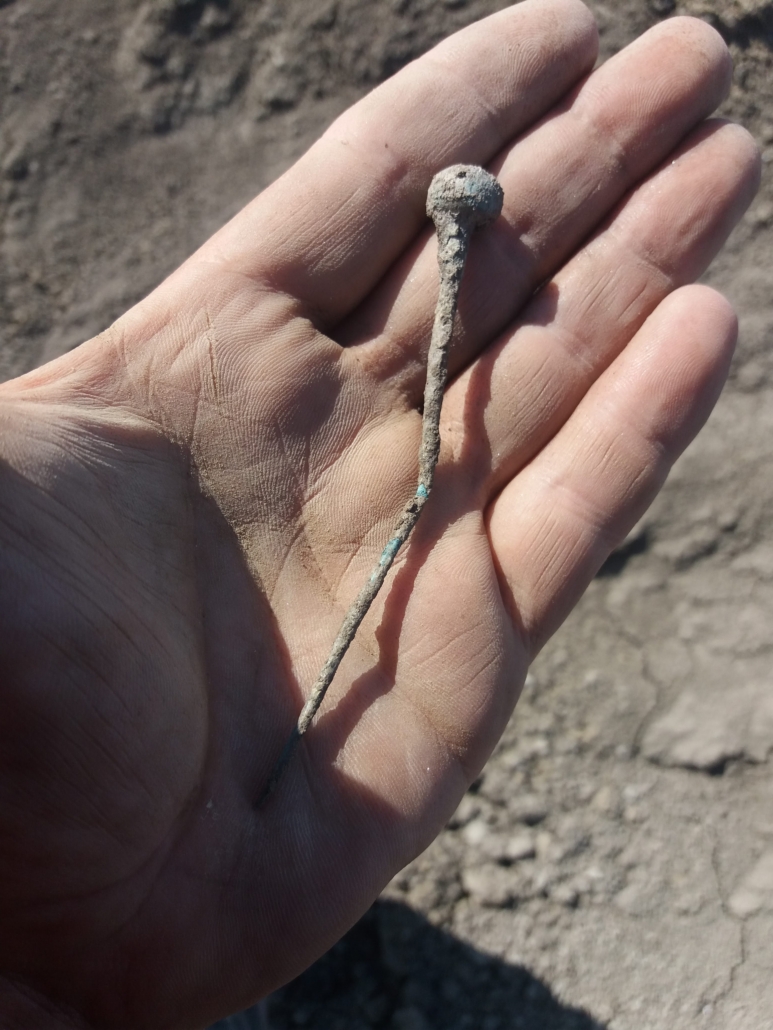
For open archaeological research into local history
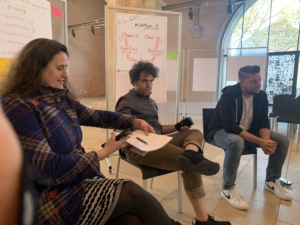 The OpenGLAM.at Kulturhackathon on 12 November 2022 at the “museum krems” took place under the motto “Search, find and then what?“. One focus of the conceptual considerations of this meeting was to make visible and discuss the fundamental problem with the handling of archaeological “chance finds” by Citizen Scientists.
According to § 11 (1) of the Monument Protection Act (https://www.ris.bka.gv.at/GeltendeFassung.wxe?Abfrage=Bundesnormen&Gesetzesnummer=10009184), the Austrian legal situation per se prohibits all persons who have not completed a “relevant” (i.e. archaeological) degree from searching for historical ground finds. Only the superficial chance find, which virtually no one who walks through the landscape with open eyes can escape, landscape, is legally unproblematic. Archaeological citizen scientists who want to look beneath the surface and probe the ground with metal detectors, for example, are acting illegally under administrative law and are threatened with fines, regardless of whether they have the consent of the landowner or not.
It is also clear, however, that the large-scale search for and ultimately securing of historical mineral resources of any kind cannot take place without the help and resources of citizen scientists. Institutionally supported archaeological citizen science initiatives, however, are more like crowd sourcing activities in disguise. Interested local researchers are often called upon to clean and sort already excavated soil finds. On the other hand, the active and independent searching of field lots, where citizen scientists come to the assumption through research and consideration that a search could be useful here, is not promoted. Active support by citizen scientists in emergency excavations, such as probing the overburden, is only supported – often with reference to the existing legal situation – if the relevant private excavation companies allow this, which is not often the case. A regulation in this regard would be beneficial for all.
The archaeological community of Citizen Scientists therefore either turns to acting in secret and anonymously, risks litigation, takes the Austrian route via the so-called “chance find” or, frustrated, abandons scientific activities. None of this can be in the interest of increasing knowledge for society as a whole.
In the OpenGLAM.at Hackathon, conceptual ideas were formulated on how to help citizen science archaeology:
- Establishment of a platform to make archaeological “chance finds” freely available. The aim is to make archaeological “chance finds” available to the public anonymously but under a free licence with an unambiguous data scheme based on scientific standards. Such a platform can help to make the exchange of knowledge, which currently takes place rather covertly in social media platforms, publicly comprehensible and thus also show what know-how and resources the promotion of citizen science engagement in archaeological field research means.
- Lobby work to inform the legislator of the problems of the current legal situation and to bring about a change. Citizen science archaeologists are willing to enter into a constructive exchange with the legislature and experts.
- It is conceivable, for example, to establish a professional aptitude test for persons without studies in prehistory and early history and thus to adapt the existing § 11 (1) DMSG.
- Respect in dealing with finds in the interest of the public is undisputed. For it is not the robber baron and the search for treasure that is in the interest of local historians, but to obtain contributions to a better understanding of our living environments in prehistoric times.